 French
  English
  Chinese
  Japanese
  Korean
  Russian
  German
  Spanish
  Portuguese
  Arabic
  Vietnamese
  Panjabi
  Indonesian
Your first car, like mine, may lack sensor modules such as cameras, radar, and lidar that make the safety features of modern Advanced Driver assistance systems (ADAS) possible, such as blind spot detection, parking assistance, and collision avoidance. Since the data collected by these sensor modules is directly related to passenger safety, it is important to ensure that they are always working properly. Unfortunately, a common cause of damage is prolonged overheating or exposure to moisture.
Precise temperature sensors in cameras, radars and liDAR help extend their life and enhance safety and reliability. First, let's look at the effect of temperature on the car camera module.
Figure 1 shows that each car may have as many as six cameras. These cameras require high dynamic range and fast response times as well as excellent low light sensitivity. To meet these requirements, designers must avoid image sensors operating at high temperatures for long periods of time.
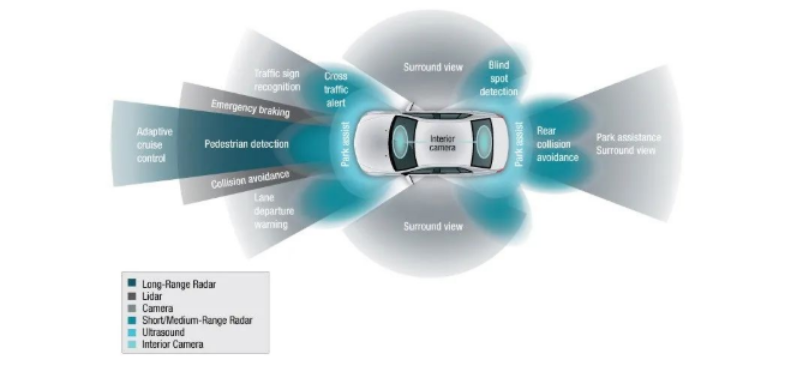
Figure 1: Overview of ADAS sensors in modern vehicles
As shown in Figure 2, car cameras are typically small (1.4in³) closed cubes with no active cooling, making it very easy to accumulate heat and warm up quickly. Image sensors are typically rated for operating temperatures from -40 °C to 125°C (junction temperature) and -40 °C to 105°C (ambient temperature). If the upper or lower limits of these ranges are reached, the electronic control unit (ECU) will have to reduce the power entering the image sensor or turn the sensor off completely until the temperature returns to normal operating conditions. Therefore, it is very important to accurately obtain the temperature of the camera.
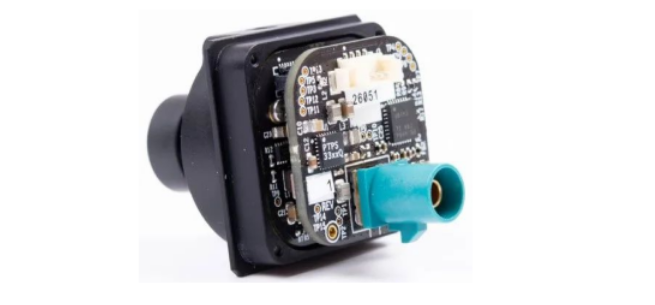 Figure 2: Camera module for small car
The image sensor usually uses an embedded temperature sensor with an error range of ±6°C. Such a large error means that the ECU may limit the use of the camera by turning it off earlier or later. These miscalculations can cause damage to the image sensor, temporarily limiting ADAS functionality until it can be maintained.
The solution is to add a separate temperature sensor that provides an accurate temperature measurement with an error of less than ±1°C.
radar
The receiver (RX) sensitivity, gain, input noise, and even output transmitter (TX) power of a millimeter wave (mmWave) sensor can vary with temperature. In Figure 3, the host processor attempts to mitigate the effects of temperature changes by periodically adjusting the circuit configuration during operation to keep the RX gain and TX power as close as possible to the configured Settings.
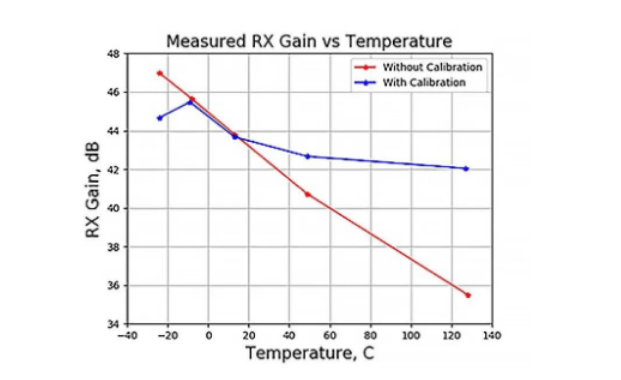
The need for high precision temperature measurement is due to the need to strike a balance between maximizing radar performance and preventing thermal damage due to high temperatures. In order to achieve this balance, the radar sensor must operate near the temperature limits while being able to reliably turn off as close to the limits as possible. Achieving this can be difficult because:
Oems began to demand higher ambient temperatures.
To reduce costs, manufacturers are starting to use plastic module housings instead of metal housings. Metal is a better heat conductor and is often used as a heat sink to dissipate the heat generated inside the module.
The radar chip has high power consumption and will cause spontaneous heat.
The embedded temperature sensor on the radar chip has an error range of up to ±7°C, which limits the performance of the radar chip. Because of this error, it is safe to turn it off at ±7°C from the operating limit to prevent damage.
Today, designers aim to achieve a temperature accuracy of ±1°C for the temperature of the bare chip inside the radar chip. To do this, you can measure the temperature difference using two separate temperature sensors, or use an ultra-thin temperature sensor under the radar chip, such as the TMP114.
Laser radar
As shown in Figure 4, LiDAR sensors can capture short -, medium – and long-range data, providing deep point clouds as a key element in enabling functional security for ADAS. Lidar contains laser arrays, time-of-flight (ToF) sensors, and controllers, all of which require temperature compensation to maintain its performance. Temperature changes can affect liDAR range measurements, and the performance of the laser array may deteriorate above 70°C. ToF sensors have high power consumption, which causes spontaneous heat, and at around 105°C the controller often needs to reduce its clock frequency or turn it off completely to prevent thermal runaway.
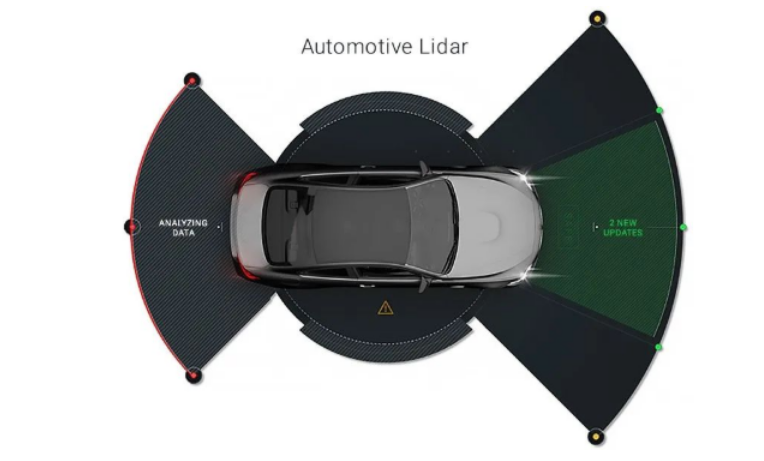
Automotive lidar range
An important design consideration for liDAR systems is the target vehicle Safety Integrity Level (ASIL).
Both the liDAR and camera modules have lenses that can break, so the internal optics can be damaged by moisture. Automotive grade humidity sensors, such as the HDC3020-Q1, measure relative humidity and temperature. It detects moisture (which can indicate a leak) and calculates when the dew point is exceeded (which can cause condensation on the lens), allowing the system to notify the user to take corrective action.
How to choose a temperature sensor
When evaluating your next temperature sensor, consider its maximum accuracy, whether it needs alarms or other features, and your communication channels. For example, if you don't have any ADC channels available (typically found in circumferenceand low-end driver surveillance cameras), then you can connect the digital temperature sensor to the I2C or SPI channel of the FPD-Link serializer. If you just want a threshold alert with hysteresis, you can use a temperature switch connected to a generic input/output. When you do have an ADC channel available, the output voltage of the analog temperature sensor is proportional to the temperature and is not affected by the external component tolerances as is the case with discrete thermistor solutions. If you do need a thermistor, consider a silicon-based linear thermistor, which can solve the accuracy and reliability issues that exist with negative temperature coefficient (NTC) thermistors, while maintaining the advantages of their low cost and small size.
peroration
Highly sensitive optics require accurate diagnosis to maintain superior performance over time, much like RF ADAS modules. This requires the use of accurate external temperature sensors, a necessary building block of ADAS modules that are fast becoming the safety-critical systems of the future.

